


The market value question
Uganda is a country with predominantly passionate football fans compared to other sports, but somehow, producing quality players worthy of top leagues in Europe has eluded them.
With no players in the top five European leagues, Ugandan footballers are deprived of opportunities to increase their market value.
Despite market values being measured based on sporting performances and potential, the majority of players in the top five leagues are valued higher than those in the rest of the leagues due to factors such as competitive advantages and significant financial power.
Therefore, with no Ugandans on such stages, this lays the foundation for lesser market values and less competitiveness, which has clear outcomes, as recently seen in their performances at AFCON in Morocco.
However, one Ugandan-born and bred player is imminent to break this cycle once again if he maintains his consistency.
Is Aziz Kayondo the next chapter?
The most recent Ugandan international to be valued at just over €1m was Farouk Miya in the 2019/20 season while playing for Turkish Super Lig side Konyaspor.
Prior to that, it was Ibrahim Sekagya in the 2007/08 season, a centre-back who was valued at €2m while playing for Austrian giants Red Bull Salzburg.
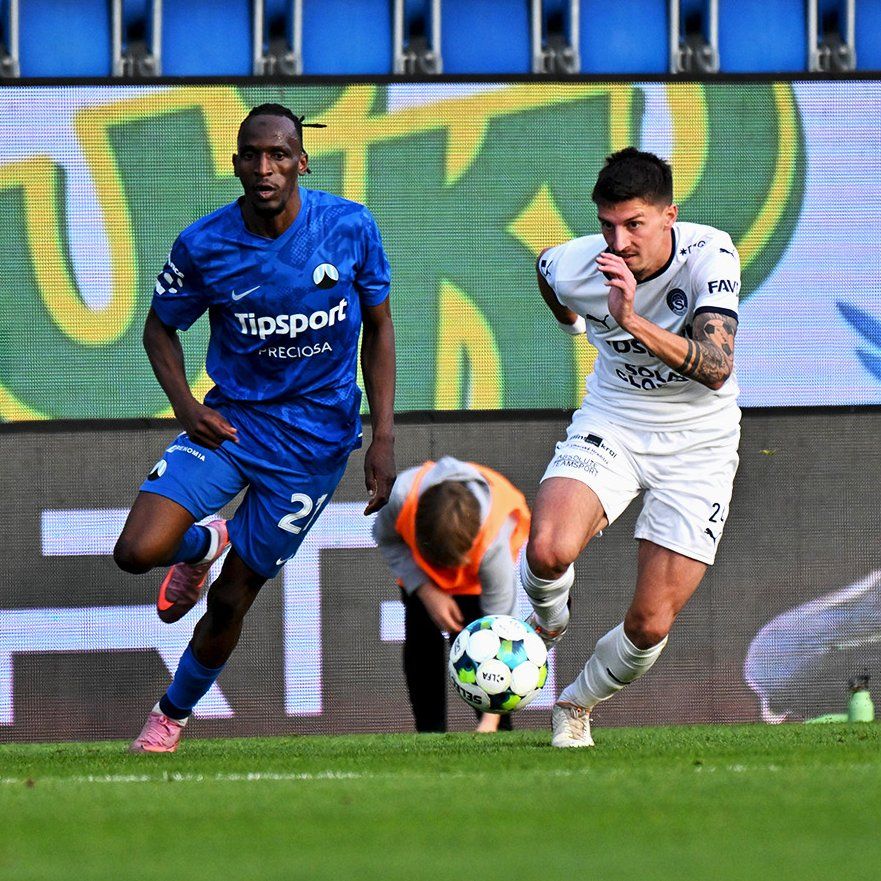
Currently, Aziz Kayondo is on the brink of breaking this drought as he is valued at €900,000 according to Transfermarkt’s December 2025 update.
Kayondo, who currently features in the Czech top tier for Slovan Liberec, has over 15 league appearances this season and is a regular in the starting lineup for his team.
Having started his career locally at Vipers SC in Uganda, Aziz began his European adventure in 2022, signing for Czech side MFK Vyskov in an undisclosed fee.
Since then, he has had spells in the MLS Next Pro with Real Monarchs, Spanish side CD Leganes B, and Israeli side Hapoel Tel Aviv before his July 2024 move to Slovan Liberec in a deal worth €400,000.
He joined Slovan Liberec with an estimated value of €450,000 in 2024, but as of December 2025, he is valued at €900,000.
This indicates progress in both performance and exposure to competitiveness in the Czech league, which could earn him a market value of over €1m in 2026 if consistent focus is prioritized.
How the Czech League reflects the gap
It is important to note that the most valuable player in the Czech league is David Moses, a 21-year-old Nigerian international playing for Slavia Prague, valued at €9m as of December 2025.
David, a central midfielder, did not make Nigeria’s squad for AFCON 2025/26 in Morocco, while Kayondo—who was arguably Uganda’s best player at AFCON—is ninety-sixth (96th) on the list of the Czech league’s most valuable players so far.
This reflects why quality is earned and not inherited. While Uganda struggles to produce competitive quality players on the map, countries like Nigeria have them in excess supply.
One then wonders what Uganda did wrong, despite having a largely passionate football fan base at home.
Uganda must prioritize academy systems.
Unlike West or North African countries, Uganda has had a handful of academies in the past—most of them based in the capital, Kampala—such as Edgars and Proline, among others.
Being set up as business models has also made it hard for underprivileged, talented kids from upcountry to benefit from such programs.
Not to say the business model is a bad idea, but it has limitations, such as the infiltration of kids with less talent but richer parents, which minimizes quality.
The Federation of Uganda Football Association (FUFA) has established the FUFA TV Cup, an annual school football tournament to aid talent identification, but this is not fully efficient, as it is seasonal.
In addition, the FUFA TV Cup is for secondary school students, with eligibility typically focused on players under 17 years old.
Meanwhile, European academies often start scouting and recruiting players as young as 9 years old, with many top clubs running U9 age group programs, though formal contracts begin later (around 16).
Recently, academies such as El Cambio in Masaka City, established by Danish national Thomas Thor, are breaking the norm by focusing on quality rather than fees, though they remain only a handful.
One of Uganda’s rising stars, James Bogere, who featured in the 2025 U-17 World Cup in Qatar, is a product of the El Cambio system.
At 17, Bogere is set to join Danish side Aarhus GF U19 to continue his development. He is already valued at €50,000 as of December 2025, while still in the academy system.
This is something most current Uganda Cranes players lacked in their development prospects, and it needs to change if Uganda is to compete at the African or global stage in the next decade.
FUFA needs to re-strategize on academy systems that nurture talent from the grassroots if they fancy any improvement in Ugandan football.
Restructuring the local league
There have been various debates about restructuring the local league into more community-based clubs that have emotional attachments or identities.
Football is more than just a game—it is an emotion and a life to many fans who value it. Thus, packaging it accordingly not only builds trust and loyalty but also stimulates competitiveness, which develops football.
























Leave a Reply